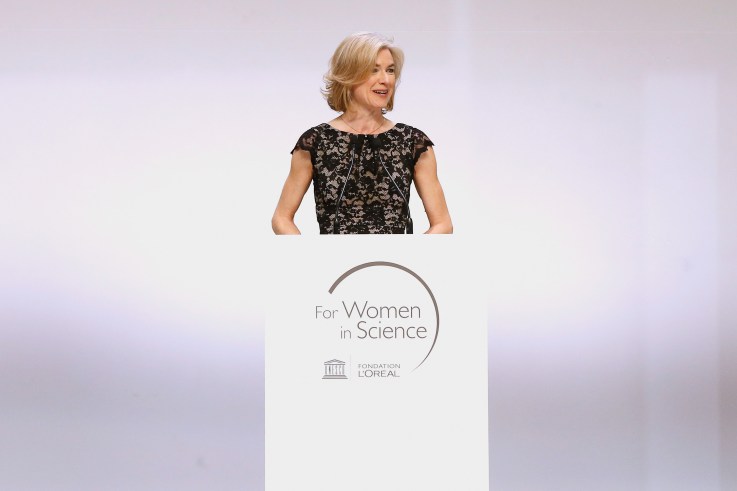

The decision of who owned the rights to a hotly disputed CRISPR gene editing patent came down in favor of the Broad Institute of MIT and Harvard today so youd think the mood would be sour at the University of California, Berkeley, the other contender in the case. But Berkeleys Jennifer Doudna tells TechCrunch this is a positive for her.
Im actually delighted to know the claims of our original patent have been allowed by the patent examiner and can now move forward towards issuance, she said.
Doudna is credited with being the first to figure out how to use CRISPR to program cells using the Cas9 enzyme. UC Berkeley filed apatent on behalf of Doudnas work but the Broad Institute used a fast-track option to beat UC Berkeley to the punch when it came to a patent for the same technique on the more complex eukaryotic cells a nuanced difference that Doudna and her co-inventor Emmanuelle Charpentier claimed was an obvious next step in the process and should not be considered for a separate patent.
While much of the science world seemed to agree with Doudna and her cohorts, the U.S. patent office thought the Broad Institute deserved a separate patent for making that leap.
But, as Doudna points out that, though the judge did notthrow out the Broad Institutes claims to that patent, it also doesnt throw out her claim that her patent should be able to cover all cells. Were actually anticipating getting our patent issued finally, one that has very broad claims, she says, comparing the two patents to tennis balls.
The analogy Ive used to explain this is the Broad Institutes patent is for green tennis balls but the patent we will have is for all tennis balls, Doudna told TechCrunch.
What the decision doesnt make clear is who companies should now license from. Companies such as Monsanto, GE Healthcare and others working with the Broad Institue or Doudnas CRISPR startup Caribou Bioscience may have to get licenses from both parties if they want to work on CRISPRing plants and animal cells for research.
This will be an on-going thing and most likely additional filings, says Doudna, who also did not rule out the potential Berkeley could appeal the decision.
Meanwhile, Berkeley has formed a partnership with the University of California San Francisco to form the Innovative Genomics Institute(IGI), which will be working with Doudnas technology to research solving human genetic diseases and is also looking at solving issues in plant genomics.
But the important piece for Doudna is that everyone can at least start to move forward in applying the technology. In the end, as scientists, we would all like to see this technology help people and ultimately thats got to be the goal that we all have, shetells TechCrunch.
The decision may come at just the right time as the use of CRISPR in modifying human embryos with certain heritable diseases was just approved by a science advisory panelformed by the National Academy of Sciences and the National Academy of Medicine this week.
Read more: http://ift.tt/2lTfi9i
The post CRISPR-Cas9 inventor Jennifer Doudnas plans on moving forward, genetically modifying humans appeared first on MavWrek Marketing by Jason

No comments:
Post a Comment